The Real Truth: Adata Sd820 External Ssd or Lenovo Thinkpad X9 14 Aura Edition?
Category: Laptops
Introduction
Buying decisions in the laptop and portable storage space are usually driven by a narrow set of priorities: performance, reliability, portability, and value. When shoppers compare a dedicated external solid-state drive like the Adata Sd820 against a premium ultraportable laptop such as the Lenovo Thinkpad X9 14 Aura Edition, the choice is not strictly about which is "better" overall but which product best solves a specific set of problems. This article offers an unbiased, practical analysis of both products so readers can match features to real-world use cases and make a confident purchase decision.
How to read this comparison
The Adata Sd820 external SSD and the Lenovo Thinkpad X9 14 Aura Edition target different parts of a modern mobile computing setup. The former is focused on fast, portable storage that augments other devices; the latter is a complete computing platform. This review breaks down capabilities and trade-offs in a way that highlights what buyers typically care about—speed, durability, compatibility, ergonomics, battery life, and long-term value.
Product analysis: Adata Sd820 External SSD
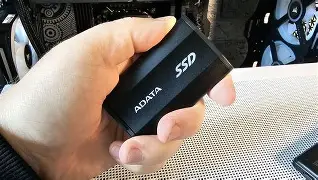
The Adata Sd820 is presented as a compact external solid-state drive intended for users who need fast, portable storage for large files, backups, and on-the-go workflows. In the real world, external NVMe-based SSDs like the Sd820 serve content creators, IT professionals, and anyone who regularly moves high volumes of data between systems.
Key strengths of an external SSD in this class include fast sequential transfers (useful for moving video clips and disk images), near-instant random access (beneficial for working with many small files), and a small footprint that makes it convenient in a travel bag. A drive such as the Sd820 typically connects over USB-C and is bus-powered, eliminating the need for external power. Many models in this segment also emphasize physical durability and thermal management to maintain performance during sustained transfers.
Real-world use cases for the Adata Sd820:
- Photographers and videographers who need to offload footage quickly during shoots.
- Professionals who carry project files between office and home systems without relying on cloud transfer time.
- IT technicians needing a fast, portable image or rescue drive for troubleshooting multiple machines.
- Creators who edit directly from external storage when local disk space is limited.
What buyers typically care about
- Speed: How fast the drive reads and writes large files and how it behaves under sustained load.
- Capacity options: Whether the drive is available in the sizes needed for the workflow.
- Compatibility: How well the drive works across Windows, macOS, and Linux without reformatting hassles.
- Durability and warranty: Shock resistance, casing quality, and warranty length.
- Thermal behavior: Whether the drive throttles under long transfers and whether it gets uncomfortably hot.
Product analysis: Lenovo Thinkpad X9 14 Aura Edition
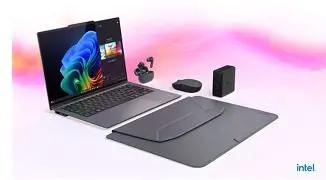
The Lenovo Thinkpad X9 14 Aura Edition positions itself as a premium 14-inch ultraportable aimed at business users and professionals who need sustained performance in a lightweight chassis. ThinkPad models are traditionally valued for build quality, keyboard comfort, security features, and enterprise-ready support. The "Aura Edition" branding suggests a distinct trim or display option, emphasizing visual fidelity or finish quality.
Practical strengths of a laptop like the Thinkpad X9 14 include a full operating system environment, a built-in keyboard and trackpad, a calibrated display suitable for content work, and integrated connectivity that lets users do everything from writing reports to running virtual machines. For many, a single laptop replaces the need for multiple devices; it also integrates security features such as TPM and optional biometric authentication that organizations often require.
Find top-rated Laptops & Computers products at great prices.
Browse Now →Real-world use cases for the Thinkpad X9 14 Aura Edition:
- Business travelers who need long battery life, durable construction, and reliable connectivity on the road.
- Remote and hybrid workers who use the laptop for office apps, video conferencing, and light to moderate creative work.
- Developers and data professionals who require a portable machine capable of running local development tools and virtual environments.
- Executives and knowledge workers prioritizing secure, manageable hardware with predictable support channels.
What buyers typically care about
- Build quality and reliability: Hinge design, chassis materials, and MIL-STD resilience.
- Keyboard and input: Key travel, layout, and trackpad accuracy for daily productivity.
- Display quality: Color accuracy, resolution, brightness, and reflectivity for different lighting environments.
- Battery life: Real-world endurance under mixed usage—office apps, web conferencing, and media playback.
- Ports and expandability: The number and type of USB-C/Thunderbolt ports, HDMI, SD card reader, and whether memory/storage is user-accessible.
- Support and warranty: On-site or advanced exchange services that businesses value.
Pros & Cons
Adata Sd820 External SSD
- Pros:
- Highly portable: pocketable size simplifies travel and fieldwork.
- Fast transfers for large files, improving workflow efficiency compared with HDDs and USB flash drives.
- Typically bus-powered via USB-C—no adapter or separate cable power required.
- Useful for extending storage quickly across multiple devices without needing to install internal hardware.
- Cons:
- Not a full computer solution—still depends on a host machine for processing.
- Performance can vary depending on host port capability and cable quality.
- Limited repairability and upgradeability compared with internal drives in a laptop.
- Thermal throttling is possible during sustained workloads if thermal design is modest.
Lenovo Thinkpad X9 14 Aura Edition
- Pros:
- All-in-one productivity device with high-quality keyboard and trackpad.
- Robust security and manageability features suited to business environments.
- Premium build and portability balance—designed to travel with professionals.
- Integrated battery and display optimized for typical workdays.
- Cons:
- Higher upfront cost compared with buying a midrange laptop plus an external SSD separately.
- Limited internal upgradeability on many ultraportables—storage and memory may be fixed or difficult to change.
- Weight and heat under heavy sustained workloads can be a compromise relative to larger workstations.
Side-by-side comparison
The following table highlights qualitative differences and the contexts where each product makes sense.
| Category | Adata Sd820 External SSD | Lenovo Thinkpad X9 14 Aura Edition |
|---|---|---|
| Primary function | Portable high-speed storage for file transfer and backup | Primary computing device for productivity and light-creative work |
| Portability | Extremely portable—fits in a pocket | Very portable for a laptop—fits in most briefcases |
| Performance impact | Speeds depend on host interface; dramatically faster than HDDs | CPU/GPU limited by thermal design but provides a whole-system experience |
| Best for | Large file transfers, external scratch disk, backups | Daily work, coding, office suites, video calls, light content creation |
| Compatibility | Works with any host that supports its interface; may need reformatting for cross-platform use | Runs mainstream OS and apps natively; broad peripheral and enterprise support |
| Security | May support hardware encryption and password protection depending on model | Built-in platform security (TPM, optional biometrics, manageability) |
| Cost considerations | Lower cost relative to laptops—good value per GB for portable NVMe external drives | Premium cost but replaces multiple devices; includes display, input, and CPU |
Buying guide: How to choose between the two (or decide to buy both)
Choosing between the Adata Sd820 external SSD and the Lenovo Thinkpad X9 14 Aura Edition is fundamentally a question of needs and priorities. The following checklist helps buyers match product strengths to their workflows.
1. Define primary workflows
If the user mostly edits photos and video on a desktop but needs to travel occasionally and quickly move large files between locations, a high-performance external SSD is a clear win. If work requires continuous creation, conferencing, document editing, and running local apps, a laptop is indispensable.
2. Consider performance vs. flexibility
An external SSD augments any computer by adding fast storage. It is flexible and can be carried between multiple machines. The laptop provides an integrated solution—compute plus storage—so the decision depends on whether compute needs are already met by another device.
3. Evaluate portability and durability needs
Those who travel light and work in field conditions should prioritize a durable external SSD with robust casing and tactile connectors. For professionals in transit who need a device that can serve as a work hub, the laptop’s battery life, screen, and keyboard become decisive.
4. Budget and total cost of ownership
External SSDs offer a cost-effective way to add capacity or speed to an existing setup. Buying a premium laptop is a larger investment but removes the need to pair a separate travel computer. Consider warranties and support—business buyers often value enterprise-level service included with laptops.
Discover deals on Laptops & Computers — updated daily.
Shop Amazon →5. Compatibility and ecosystem
Confirm that the chosen external SSD works with the primary machines in use (Windows, macOS, Linux, or game consoles), and check the included cable and host port capabilities. For laptops, verify OS and enterprise management options, as well as accessory compatibility (docking solutions, external monitors).
6. Future-proofing and expandability
External SSDs are inherently future-proof in that they travel with the user across new machines. Laptops may offer limited internal upgrade paths; check whether storage and RAM are soldered or upgradable. Also consider ports: having Thunderbolt or multiple USB-C ports increases long-term utility.
7. Practical checklist before purchase
- Confirm the interface version and whether the host supports it to realize full performance.
- Choose a capacity that matches typical project sizes with headroom for growth.
- Look for real-world battery-life reviews for the laptop under mixed loads rather than vendor claims alone.
- Review thermals—sustained performance matters for long transfers (SSD) and heavy computing (laptop).
- Check warranty and support options—business-class laptops often offer enhanced service levels.
When buying both makes sense
For many professionals the optimal setup is not one or the other but both: a well-specified ultraportable laptop paired with a fast external SSD. This combo provides a primary work machine that is light and efficient, plus an external scratch or archive drive that supports high-bandwidth workflows without taxing the laptop's internal storage or requiring frequent cloud transfers. The external drive also serves as a secure backup or transport medium for sensitive projects.
Conclusion
The Adata Sd820 external SSD and the Lenovo Thinkpad X9 14 Aura Edition address distinct but complementary needs. The Adata Sd820 is a specialty tool—highly portable, focused on storage performance, and ideal for moving large datasets quickly. The Thinkpad X9 14 Aura Edition aims to be a complete, enterprise-ready computing platform that balances portability and functionality for daily professional use.
Buyers should map their daily workflows to product strengths: choose the external SSD if fast, portable storage is the missing piece in an existing setup; choose the laptop if a single, reliable, and manageable device will consolidate tasks and replace multiple gadgets. For many professionals, pairing a premium ultraportable laptop with a high-performance external SSD provides the best of both worlds: a portable workspace and a portable, high-capacity working drive.