Panasonic Z95B First Look: Unboxing and Impressions
Introduction
The Panasonic Z95B arrives as the company's latest high-end television offering aimed at viewers who prioritize cinematic picture quality, accurate color reproduction, and a disciplined approach to image processing. This first-look article examines the unboxing experience, design and build, imaging performance, smart features, sound, gaming capabilities, and real-world use cases that matter to buyers. Rather than a spec-sheet sprint, the article focuses on what owners will actually notice day-to-day: setup, picture quality in familiar content types, handling of HDR material, and how the TV performs in living-room and home-theater scenarios.
Unboxing and First Impressions
Out of the box the Z95B presents itself as a premium product. Packaging is protective and tidy, with the panel wrapped and held in place to minimize handling damage during transit. The basic contents include the TV panel, a stand (or feet depending on regional configuration), a slim remote control, a power cord, and printed setup guides. Panasonic typically includes a simple Quick Start guide for first-time setup and information on how to register the product for warranty.
Initial setup is straightforward: attach the feet or assemble the stand, connect the power, and connect one or more HDMI sources. The remote is compact and engineered for comfortable one-handed use; button layout balances direct-access keys for common functions with a small directional pad and dedicated input/menu controls. On first power-up, the TV steps through language, network, and basic picture settings. A welcome suggestion to enable a Filmmaker or Professional mode (if available) is useful for owners who prefer out-of-the-box accuracy over punchy “store” presets.
Design and Build
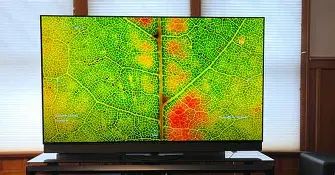
The Panasonic Z95B follows contemporary high-end design cues: slim bezels, a thin screen profile, and understated finishes. The build quality feels solid — panel mounting points are robust, and the stand options provide stable support on most entertainment units. The back panel groups inputs in an organized manner with clearly labeled HDMI ports, optical audio out, Ethernet, and legacy connections. Placement of the connectors is practical for wall-mounted installations and center-console setups alike.
For buyers considering aesthetics and room integration, the Z95B manages to be visually discreet when off and elegant when displaying content. The minimal bezel keeps attention on the picture, which is where this TV aims to make its strongest impression.
Display and Picture Quality
At the heart of the Z95B is a premium OLED-type panel strategy focused on absolute black levels, contrast, and color fidelity. The immediate strength is contrast — deep, inky blacks bring cinematic depth to scenes with mixed brightness levels. As with other high-quality OLEDs, the panel excels in dark-room viewing, where subtle shadow detail and nuanced grading are preserved rather than crushed.
Color accuracy appears to be a priority. Panasonic’s tuning historically skews toward faithful reproduction rather than oversaturated consumer profiles, which benefits viewers who watch films, dramas, and documentary content that rely on naturalistic color. The TV supports modern HDR formats and demonstrates good tone mapping for HDR10 and Dolby Vision content, rendering specular highlights with pleasing restraint and retaining color saturation in bright scenes.
Motion handling is competent: Panasonic’s processing smooths camera pans and sports motion while avoiding obvious artificial motion artifacts. For fast-paced sports or action movies, the Z95B manages to keep images clean without introducing excessive interpolation, though motion interpolation settings remain available for viewers who prefer soap-opera-style smoothness for certain content.
Viewing angles on OLED-style panels are generally strong compared with VA LCDs. The Z95B maintains color and contrast from off-center seats in a living room, which matters for families and group viewing. Reflections and glossy finish may require room lighting consideration: positioning and ambient light control will influence perceived contrast and highlights.
HDR and Brightness Considerations
HDR content is a core strength of the Z95B’s platform. The TV renders HDR highlights clearly, providing a convincing sense of brightness without flattening midtones. In real-world viewing — HDR streaming, UHD Blu-ray movies, and gaming in HDR — highlights such as sunlight glints or reflections on water pop without making skin tones feel unreal.
Shop the latest TVs & Home Theater picks on Amazon.
See Deals →Panasonic typically includes a suite of picture modes and fine-grain calibration controls for professional or enthusiast users. Owners who are serious about out-of-the-box accuracy can expect options like Filmmaker Mode and custom calibration settings that allow for ISF-like adjustments. For most buyers, leaving the TV in a neutral picture mode and disabling heavy post-processing yields the most faithful results.
Sound Quality and Audio Features
Internal speakers are serviceable for everyday viewing — dialogue clarity is good, and built-in audio processing attempts to widen the soundstage. However, buyers aiming for immersive movie sound or high-fidelity music playback will likely prefer a dedicated soundbar or AV receiver. The Z95B includes modern audio outputs and passthroughs, making it straightforward to integrate into a larger audio setup. For a typical living-room setup, pairing the TV with a compact soundbar will noticeably improve bass extension and surround impression.
Smart Platform and User Experience
Panasonic equips its premium TVs with a modern smart platform that hosts mainstream streaming apps and services. Navigation is generally responsive, and voice control options are supported in many markets via popular voice assistants. The platform prioritizes smooth media playback and access to apps, but user preferences vary: some will appreciate the cleaner, cinema-focused interface compared with advertising-heavy alternatives, while others might miss deeper smart-home integrations offered by rival ecosystems.
Network connectivity is robust, with both Wi-Fi and Ethernet options for stable streaming. The app library covers the essentials for most viewers: mainstream streaming providers, catch-up services, and content stores. Software updates and platform improvements should be expected over time, and updates typically aim to improve app compatibility and performance.
Gaming Performance
For gamers, the Z95B includes features that match current console and PC capabilities: low-latency game modes, support for high refresh rates, and adaptive sync technologies that reduce tearing and stutter. These attributes make the set a solid choice for next-gen console owners who want a single display for movies and gaming. The TV’s HDR performance adds punch to titles that use dynamic HDR metadata, and color fidelity helps preserve game art direction.
Competitive gamers prioritizing tiny fractional differences in input lag and motion clarity should evaluate the Z95B against dedicated gaming displays, but for general gaming — immersive single-player titles and console-based multiplayer — the TV’s balance of image quality and gaming features will satisfy most players.
Real-World Use Cases
The Z95B suits several common buyer profiles:
- Home theater enthusiasts — Those who prioritize film-like picture quality, accurate color, and deep blacks will appreciate the set’s cinematic tuning and calibration options.
- Families and living rooms — Strong viewing angles and flexible smart features make the TV a practical living-room centerpiece for streaming, sports, and family movie nights.
- Casual and console gamers — With low-latency modes and HDR performance, the set doubles as a high-quality gaming display without major compromises.
- Room with controlled lighting — Users with the ability to control ambient light (drapes, lamps) will see the best contrast and HDR performance.
Pros & Cons
- Pros
- Excellent contrast and black levels: OLED-style panel delivers deep blacks that enhance cinematic content.
- Accurate color out of the box: Cinema-first tuning yields natural skin tones and realistic hues.
- Comprehensive HDR handling: Highlights and tone mapping produce convincing HDR imagery for movies and shows.
- Strong viewing angles: Good color and contrast retention for group viewing.
- Modern gaming features: Low-latency modes and adaptive sync support console gaming well.
- Cons
- Built-in audio is average: Most buyers will want a soundbar or external audio system for movie-grade sound.
- Brightness in very bright rooms: Performance is best in dim-to-moderate ambient light; very bright rooms may wash out HDR pop.
- Smart platform preference: Some users may prefer other smart ecosystems with deeper integrations or a larger app library.
How the Z95B Stacks Up: Quick Comparison
The following comparison table offers a high-level look at how the Z95B compares to two contemporaries typically considered by buyers in this segment. The table uses qualitative assessments rather than precise numbers to help prospective purchasers weigh trade-offs without getting bogged down in variable specifications.
| Feature | Panasonic Z95B | Competitor A (Premium OLED) | Competitor B (High-end LCD) |
|---|---|---|---|
| Panel type | OLED-style — focus on deep blacks | OLED — cinematic color tuning | Mini-LED LCD — very high peak brightness |
| HDR performance | Strong HDR tone-mapping and highlights | Very strong, film-oriented | Excellent brightness-centric HDR |
| Color accuracy | High — neutral, filmmaker-friendly | Very high — pro-grade tuning | Good — punchy consumer profile |
| Sound | Average — recommend soundbar | Above-average system available | Varies — some models include stronger speakers |
| Gaming features | Comprehensive — low latency, adaptive sync | Competitive — low input lag, fast response | Good — strong brightness for HDR gaming |
| Best for | Home cinema fans and mixed-use households | Calibration enthusiasts and professional viewing | Bright-room viewers and sports fans |
Buying Guide: What to Consider Before Purchasing
When evaluating the Z95B, buyers should think beyond the headline features and match the set to their environment and viewing habits. Here are the practical considerations that typically matter most.
Looking for the best TVs & Home Theater deals on Amazon?
See Deals →1. Room lighting and placement
OLED-style displays excel in controlled lighting. If the TV will be used in a bright, sunlit living room, consider where glare might fall and whether curtains or blinds are practical. For rooms with heavy natural light, a high-brightness LCD alternative may be preferable.
2. Primary use cases
Decide whether movies, sports, gaming, or general streaming will be the main use. The Z95B favors film and mixed-use scenarios — perfect for viewers who value accurate color and cinematic presentation. Gamers still benefit from the TV’s features, but competitive players may prioritize monitors with ultra-low latency.
3. Sound system plans
Factor in the cost and space for a soundbar or AV receiver. While internal speakers are adequate for everyday TV shows, a dedicated audio setup transforms the cinematic potential of the Z95B.
4. Calibration and picture modes
Owners who want maximum fidelity should plan for an initial calibration or at least switch to a neutral picture mode out of the box. Panasonic often provides user-accessible calibration menus, but professional calibration yields the best results if the budget allows.
5. Connectivity and future-proofing
Confirm the number of HDMI 2.1-capable inputs and any audio return channel options (eARC). These ports enable next-gen consoles, high-refresh-rate PCs, and high-bandwidth AV receivers to function without compromise. The Z95B’s connectivity suits most modern setups but check the model’s input layout against planned devices.
6. Size and viewing distance
Choose a size that fits the room and seating distance. For a cinematic experience, larger sizes are preferable, but practical constraints like furniture and wall space will limit choices. Measure viewing distance and consider resolution — 4K resolution pairs well with screen sizes that allow close or immersive seating.
7. Warranty and longevity
Investigate warranty terms and any extended protection options. OLED panels are generally durable, but buyers concerned about long-term burn-in risk should follow manufacturer guidance on usage patterns and enabling pixel-shift or screen-saving features.
Practical Tips for Getting the Best from the Z95B
- Start with a neutral picture mode (Cinema/Filmmaker) to avoid oversaturated factory presets.
- Disable unnecessary motion interpolation for movies to preserve original frame cadence.
- Use a dedicated HDMI port labeled for high refresh/HDR for gaming consoles to ensure best performance.
- Run any available automatic calibration tools and consider professional tuning if exact reproduction matters.
- Pair with a soundbar that supports eARC to retain high-quality audio passthrough without losing convenience.
Conclusion
The Panasonic Z95B makes a convincing case for buyers who want a television tuned toward cinematic fidelity without sacrificing modern conveniences like smart streaming and gaming support. It brings deep blacks, restrained color tuning, and competent HDR handling together in a refined package. Real-world owners will appreciate its performance for movies and mixed-use living rooms; those prioritizing the very brightest HDR highlights in sun-drenched rooms should consider room conditions before deciding. Overall, the Z95B positions itself as a thoughtful choice for viewers who value picture accuracy and an unflashy, film-first approach to display design.